What Your Profit and Loss Statement Actually Tells You
You may look at your Profit and Loss Statement, glance at the number at the bottom and think:
“We made money.”
Or perhaps:
“That doesn’t look good.”
But your Profit and Loss Statement—often called a P&L or Income Statement—can tell you much more than whether your business showed a profit.
It can help you understand where your money is coming from, where it is going and whether your business is moving in the right direction.
What Is a Profit and Loss Statement?
A Profit and Loss Statement summarizes your business’s income and expenses during a specific period of time.
You might review it:
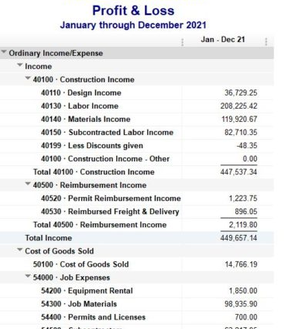
Unlike a Balance Sheet, which shows what your business owns and owes at a particular moment, the P&L shows what happened financially over a period of time.
In simple terms, it answers:
Did the business earn more than it spent?
That answer matters—but it is only the beginning.
Where Is Your Revenue Coming From?
The first section of your P&L shows the income your business earned.
Instead of looking only at total revenue, ask:
A business can be busy without being profitable. Understanding exactly what generates revenue helps you focus your time, money and energy on the work that contributes most to the business.
What Does It Cost to Deliver Your Product or Service?
Some businesses have a section called Cost of Goods Sold or Cost of Sales.
These are the direct costs associated with producing or delivering what the business sells. Depending on the business, they might include:
When you subtract these costs from revenue, you get your gross profit.
Gross profit helps you determine whether your pricing adequately covers the direct cost of delivering your product or service.
If sales are increasing but gross profit is shrinking, the business may be dealing with higher material costs, underpricing or an inefficient delivery process.
Where Is the Money Going?
The expense section shows what it costs to operate the business.
This may include:
Looking at expenses does not mean simply searching for everything you can eliminate. Many expenses are necessary and support growth.
The better questions are:
A good expense is not always the least expensive option. It is an expense that serves a clear purpose in the business.
Is Your Business Actually Profitable?
After income and expenses are recorded, the bottom of the P&L shows the business’s net profit or net loss.
If income is greater than expenses, the business shows a profit.
If expenses are greater than income, it shows a loss.
But one profitable month does not necessarily mean the business is financially strong—and one difficult month does not necessarily mean the business is failing.
The real value comes from reviewing the numbers consistently and identifying trends.
Ask:
Revenue and Profit Are Not the Same Thing
It is easy to become excited when revenue grows. But increasing sales does not automatically mean the business is making more money.
Imagine a business that generated $100,000 in revenue.
If it spent $95,000 to generate that income, its profit was only $5,000.
Another business may generate $75,000 but spend only $50,000, leaving a $25,000 profit.
The business with lower revenue is actually keeping more of what it earns.
That is why revenue alone never tells the complete story.
Revenue shows what came in. Profit shows what the business kept after its expenses.
Compare, Don’t Just Look
A P&L becomes much more useful when you compare it with something.
Consider comparing:
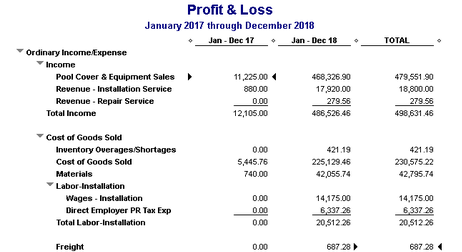
A single report gives you information. Comparisons give that information context.
For example, a marketing expense may appear high when viewed by itself. But if it helped produce a meaningful increase in profitable sales, it may have been money well spent.
Without comparison and context, it is easy to make decisions based on assumptions rather than facts.
Profit Does Not Always Equal Cash in the Bank
One of the most important things to understand is that your P&L and your bank balance do not measure the same thing.
Your business may show a profit while cash is tied up in:
Some of those transactions affect the Balance Sheet or cash flow without appearing as an ordinary expense on the P&L.
That means a profitable business can still experience cash-flow problems.
Your P&L is essential, but it should be reviewed alongside your Balance Sheet and cash position to understand the full financial picture.
Your P&L Helps You Make Better Decisions
When your books are accurate and your reports are reviewed regularly, your Profit and Loss Statement can help you decide:
The P&L is not simply a report prepared for your tax return.
It is one of the most valuable decision-making tools in your business.
Accurate Reports Begin With Accurate Bookkeeping
A financial report is only useful when the information behind it is complete, current and categorized correctly.
If transactions are missing, personal and business expenses are mixed together or income and expenses are entered into the wrong accounts, the final report may give you a misleading picture of the business.
That is why consistent bookkeeping and a well-organized Chart of Accounts matter.
You should be able to look at your P&L and understand what happened in your business—not feel confused by numbers that do not make sense.
Don’t Just File Your P&L. Use It.
Your Profit and Loss Statement tells the financial story of your business over time.
It shows what you earned, what it cost to earn it and what remained after your expenses. More importantly, it helps you recognize patterns, ask better questions and make decisions based on real information.
You do not need to become an accountant to understand your financial reports.
But you do need reports you can trust—and someone who can help you understand what those numbers mean for your business.
Your Profit and Loss Statement is only as useful as the information behind it, which is why a properly organized Chart of Accounts is so important.
Best Solutions 406 provides bookkeeping, payroll, QuickBooks support and financial reporting services to help business owners stay organized, understand their numbers and make informed decisions. Contact us to learn how we can help you create a clearer financial picture of your business.